Listfolk
If you want more protein in your week, start with your shopping list. We looked across the store, from the meat counter to the dairy case, and ranked these foods by the protein in one standard serving, using USDA data. Each one meets the FDA’s bar for “high in protein.”
How we picked
- Data
- USDA FoodData Central
- Serving
- The FDA standard serving behind the Nutrition Facts label
- “High” means
- At least 10 g of protein per serving, 20% of the Daily Value
- Checked
- October 2026
-
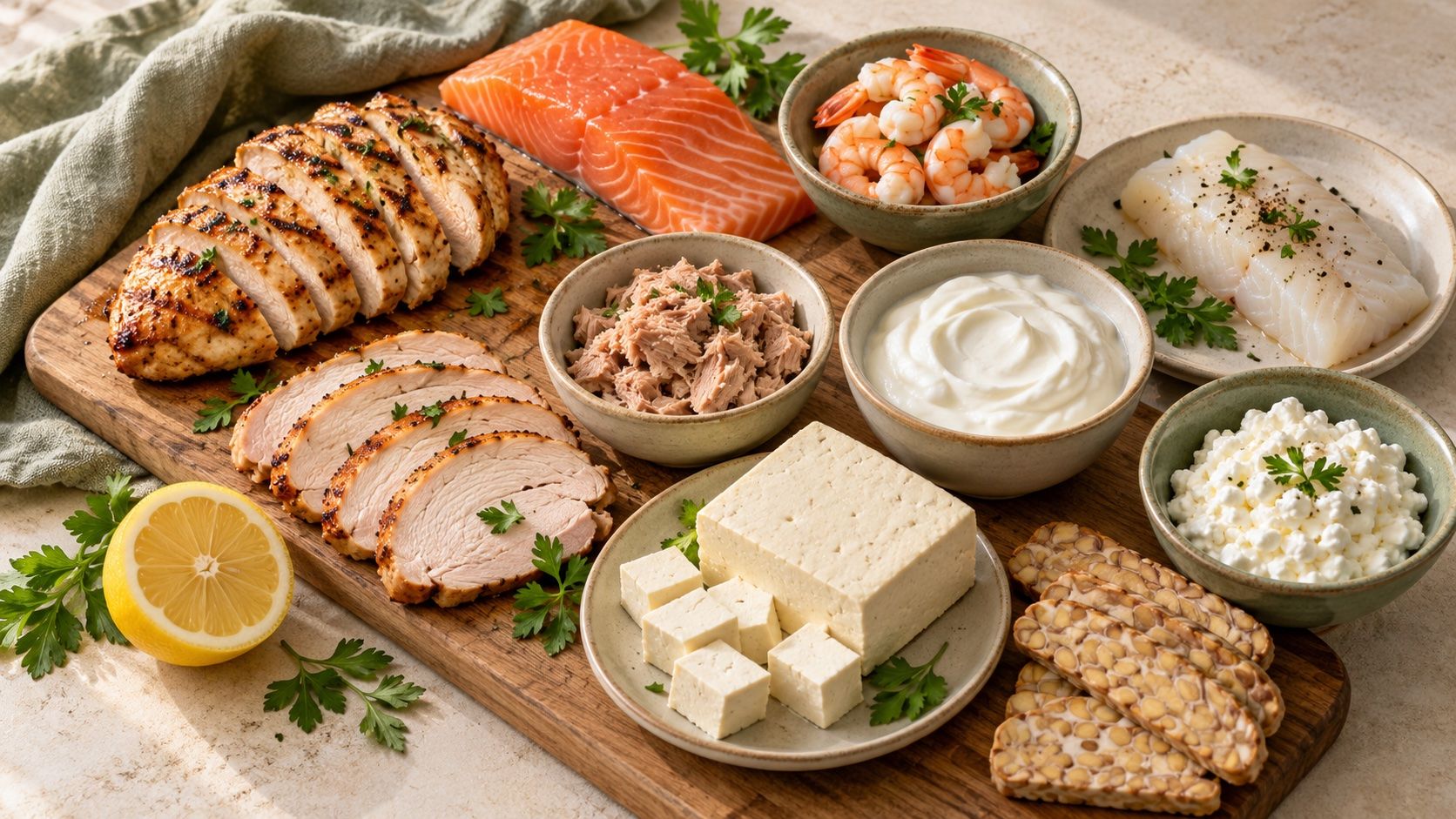
Chicken breast
26 g protein per 3 oz (85 g), cooked 31 g per 100 g · USDA
Chicken breast is the white meat from the front of the bird, usually sold boneless and skinless. It’s almost all muscle, and with the skin off there’s very little fat, so once you set the water aside, nearly everything left is protein. Cooking drives off some of that water, which is why a cooked portion has more protein than the same weight raw. Thin cutlets and butterflied breasts cook faster and more evenly than thick ones. Cook a few at once and slice the extras for lunches during the week.
-
Turkey breast
25 g protein per 3 oz (85 g), cooked 30 g per 100 g · USDA
Turkey breast is white meat, much like chicken breast, and it has nearly as much protein. Most of a turkey’s fat sits in the skin and the dark meat, so the breast on its own is mostly muscle. You can buy it as a whole bone-in breast, a boneless roast or thin cutlets. Roast a breast on the weekend and slice it for sandwiches and salads over the next few days.
-
Beef top sirloin
25 g protein per 3 oz (85 g), cooked 29 g per 100 g · USDA
Top sirloin is a steak cut from the back of the cow, just behind the short loin. It’s a hard-working muscle with little marbling, so once the fat around the edge is trimmed, most of what you eat is protein. It’s tender enough to grill or pan-sear without a marinade. Slice it thinly across the grain for stir-fries, salads and wraps.
-
Shrimp
20 g protein per 3 oz (85 g), cooked 24 g per 100 g · USDA
Shrimp are shellfish, and their meat is mostly water and protein, with very little fat. They cook in a few minutes, so they suit quick meals like stir-fries, pasta and tacos. Most shrimp in stores were frozen before they reached the counter, so a bag from the freezer aisle is just as good. Thaw only what you need overnight in the fridge, or in a bowl of cold water. They’re done as soon as they turn pink and curl, so take them off the heat right away.
-
Cod
19 g protein per 3 oz (85 g), cooked 23 g per 100 g · USDA
Cod is a white fish with large, firm flakes and a mild taste. It carries very little fat, so apart from water, a fillet is almost all protein. That mild flavor makes it an easy first fish for people who don’t usually eat seafood. Bake it, pan-fry it, or use it in fish tacos and stews. Frozen fillets keep for months and can go straight into the oven.
-
Salmon
19 g protein per 3 oz (85 g), cooked 22 g per 100 g · USDA
Salmon is an oily fish, and most of the salmon in stores is farmed Atlantic salmon. It has more fat than white fish like cod, and it still has plenty of protein in every serving. That fat keeps it moist and forgiving while it cooks. Roast fillets on a sheet pan with vegetables, or flake leftovers into rice bowls and salads.
-
Greek yogurt
17 g protein per 6 oz (170 g) 10 g per 100 g · USDA
Greek yogurt is regular yogurt with much of its liquid whey strained out. Straining takes away water, so the protein that’s left ends up in a thicker, denser yogurt. That’s why it has much more protein per serving than regular yogurt. Buy it plain and add your own fruit, or stir it into dips and sauces in place of sour cream. A large tub covers breakfasts and snacks for most of the week.
-
Tempeh
17 g protein per 3 oz (85 g), cooked 20 g per 100 g · USDA
Tempeh is a firm cake of whole soybeans that are cooked and fermented until they bind together. Because it keeps the whole bean, it has more protein than tofu, which is made from soy milk. It has a nutty, savory taste and holds its shape in a pan. Slice it thinly and brown it, or crumble it into chili, tacos and pasta sauce. Look for it in the refrigerated section near the tofu.
-
Canned tuna
17 g protein per 3 oz (85 g), drained 19 g per 100 g · USDA
Canned tuna is cooked fish sealed in a can, ready to eat once you drain it. Light tuna packed in water is the most common kind, and with the water drained off, it’s mostly protein. Cans keep for a long time in the pantry, which makes tuna an easy backup for lunches. Mix it into salads or pasta, or pile it on toast with a squeeze of lemon.
-
Cottage cheese
11 g protein per 110 g, about ½ cup 10 g per 100 g · USDA
Cottage cheese is a fresh cheese made from milk curds that are left loose instead of pressed into a block. Those curds are mostly milk protein, which is why a scoop has more protein than a serving of most other cheeses. You can buy it with small or large curds. Eat it with fruit, spread it on toast, or blend it into pancake batter and pasta sauces.
Close, but under 10 g per serving: lentils (8 g per 90 g cooked), firm tofu (8 g per 3 oz), peanut butter (7 g per 2 tbsp), and eggs (6 g per large egg).
General information, not medical or dietary advice.
Nutrient data from USDA FoodData Central, checked October 2026.